


Heat Shrink Cable Accessories for Renewable Energy: What Solar & Wind EPC Engineers Must Know in 2026
2026-05-27 23:16
Mr. Xiao — Senior Technical Advisor, Zhizheng
Over 20 years in heat shrink & cold shrink cable accessory R&D and global project support. Based in Huangshi, Hubei, China.
? Table of Contents
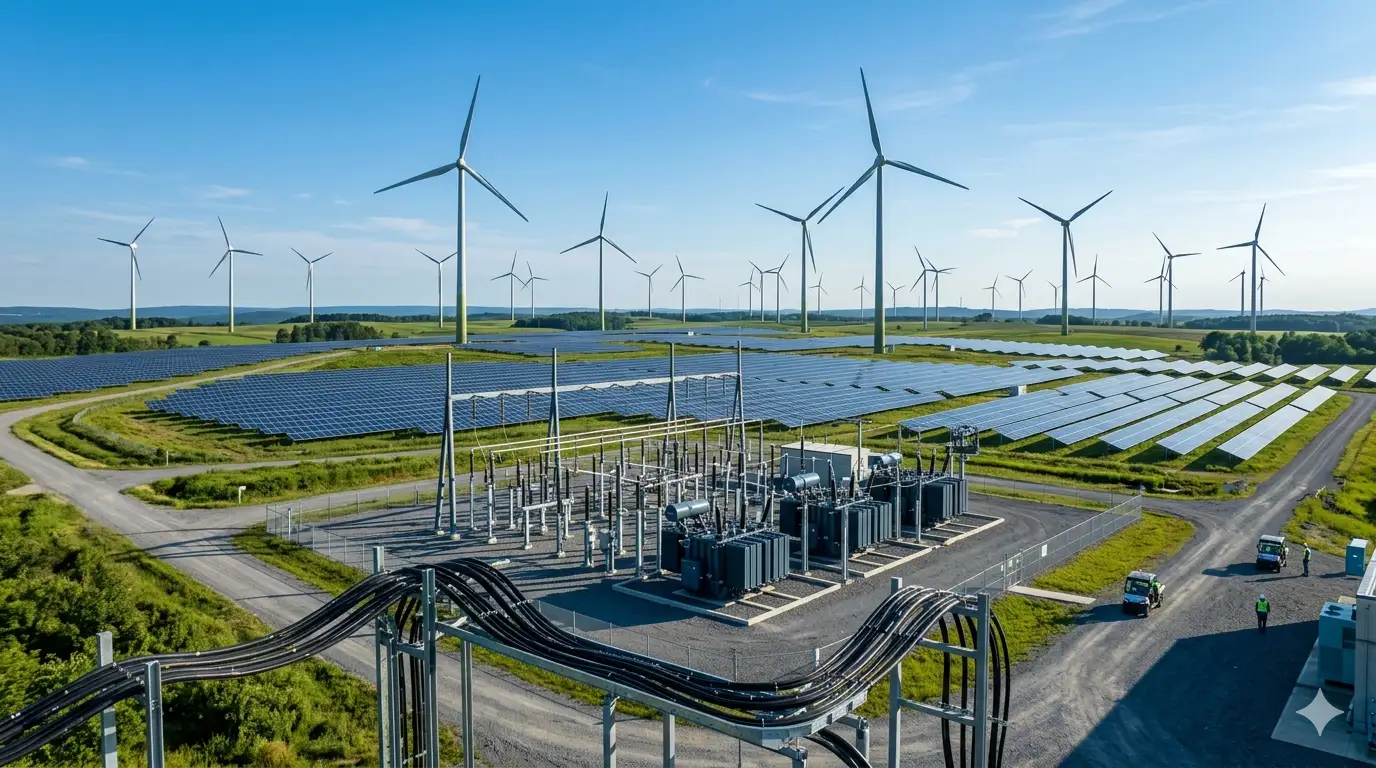
If you've ever stood on a 200 MW solar field in the Atacama Desert or walked the turbine rows of a North Sea wind park, you already know what most procurement specs miss: the cable is only as reliable as its termination. The inverter gets the glory. The PV modules get the warranties. But the heat shrink cable termination kit sitting at the cable end of every collector circuit is quietly deciding whether your project delivers energy — or delivers trouble.
I'm going to be direct with you. In 2026, the global push into renewable energy infrastructure has made cable accessories one of the most undersourced, underspecified components in the EPC supply chain. The market numbers are striking enough to pay attention to.
Why Cable Accessories Have Become a Bottleneck in Renewable Energy Projects
The global cable accessories market doesn't lie. The market was valued at USD 63.39 billion in 2024 and is on track to grow from USD 66.62 billion in 2025 to USD 99.18 billion by 2033, at a CAGR of 5.1%. That's not abstract growth — it maps directly to the explosion of solar and wind installations across Europe, the Middle East, and Latin America.
Renewable energy integration is a significant growth driver, as wind and solar power projects require durable and weather-resistant cable accessories to ensure safe and efficient energy transmission in harsh conditions. And yet many EPC contractors still treat cable accessories as a last-minute line item.
Here's the real pain point: the rapid development of solar, wind, and hydropower projects has become one of the most important growth factors for the power cable market. Unlike traditional centralized power generation, renewable energy projects are often widely distributed, placing higher requirements on transmission distance, cable reliability, and environmental resistance.
That last phrase — environmental resistance — is where most project failures begin. And it's exactly what we design for at Zhizheng.
? Pro Tip
When you're sourcing cable accessories for a utility-scale renewable project, always ask: does the supplier's product range cover both the 1kV collector circuits and the 35kV substation feeder cables? Many vendors cover one or the other. A supplier who covers both voltage tiers from a single integrated manufacturing base saves you considerable qualification time and freight risk.
The Three Environmental Killers: UV, Moisture, and Thermal Cycling
I've reviewed failure reports from solar farms in Spain, Saudi Arabia, and Chile, and wind parks in Denmark and Brazil. The failure modes look different on the surface but share one root cause: the cable accessories were specified for a general industrial environment, not for a renewable energy site. Let me walk through the three killers.
1. Ultraviolet Radiation
The key difference between PV systems and most other electrical systems relates to wiring methods installed in harsh environmental conditions. Challenges include wide ranges of temperature, excessively hot temperatures below the array, and direct exposure to UV rays from the sun. Standard polymers degrade quickly under continuous UV bombardment. The insulation becomes brittle, microcracking begins, and partial discharge follows — sometimes within three to five years on a 25-year-life project.
Solar farms endure high UV exposure, extreme temperatures, and physical impact from wind-blown debris or hail. Anti-tracking heat shrink tubing — like the products we manufacture specifically for these applications — incorporates carbon black loading and cross-linked polyolefin compounds that remain dimensionally stable across decades of UV exposure.
2. Moisture Ingress
Solar installations often involve placing cables in outdoor environments where exposure to weather elements like wind and moisture is a concern. The threat isn't just rain. Ground moisture, morning condensation, and flooding from extreme weather events all work to infiltrate cable terminations and joints. Once moisture reaches the conductor shield interface, the insulation system is compromised.
For medium-voltage cable joints and terminations in the 10kV and 35kV range, this is particularly critical. MV cables insulated with HEPR rubber can withstand continuous operating temperatures of 105°C; in both cases, MV cables can include sealing elements that prevent the longitudinal propagation of moisture in the event of outer sheath perforation. A properly applied heat shrink joint kit with mastic sealing creates a comparable barrier at the termination point.
3. Thermal Cycling
Renewable energy cable accessories must handle expanded temperature ranges, from -40°C to +85°C, with superior moisture sealing and extended service life ratings of 25+ years to match solar panel and wind turbine warranties, while withstanding constant outdoor exposure.
In a desert solar farm, the cable conduit temperature can swing 60°C between a winter night and a summer afternoon. Every thermal cycle creates mechanical stress at the termination interface. Over thousands of cycles, inferior materials crack, delaminate, and fail. This is why we specify cross-linked polyolefin with controlled shrink ratios, not standard PVC sleeves.
? Practical Take
On wind power sites, the thermal cycling problem is compounded by constant mechanical vibration from turbine operation. Harsh environmental conditions such as moisture, temperature fluctuations, and vibration increase the risk of insulation damage and connector failures. Specify heat shrink accessories with adequate wall thickness and confirmed flexibility at low temperatures. A product that performs at 25°C in a test lab is not necessarily a product that performs at -25°C on a North European wind mast.
Heat Shrink vs. Cold Shrink: Which One Belongs on Your Renewable Energy Site?
This is a question I get regularly from EPC engineers preparing bills of materials for projects in Europe, the Middle East, and Latin America. The answer depends on your site conditions, your installation crew's skill level, and your long-term maintenance philosophy.
| Factor | Heat Shrink Cable Accessories | Cold Shrink Cable Accessories |
|---|---|---|
| Installation Method | Applied heat source (torch / heat gun) | No heat required — spiral core removed |
| Voltage Range | 1kV / 10kV / 35kV | 1kV / 15kV / 35kV |
| Best for Solar Farm Use | Collector cables, substation feeders | High-moisture zones, confined spaces |
| Best for Wind Farm Use | Tower internal cabling, nacelle connections | Offshore turbine base, underground collection |
| UV / Weather Resistance | Excellent (anti-tracking grade available) | Excellent (silicone rubber base) |
| Installation Speed | Moderate — heat application required | Fast — ideal for tight schedules |
| Cost Profile | Lower unit cost — high volume efficiency | Higher unit cost — labor saving advantage |
| Zhizheng Product Reference | RSY-35 / RSY-10 / RSY-1 / JRSY-10 / JRSY-35 | LS-35 / LS-15 / LS-1 / JLS-35 / JLS-15 |
In practice, many large-scale renewable projects use both. Technological advancements, including pre-molded and heat-shrink joint solutions, are enhancing installation efficiency and system longevity across utility and industrial applications. On a 100 MW+ solar farm, it's common to spec heat shrink kits for the above-ground collector cable terminations (where installation access is good) and cold shrink joints for the underground distribution runs where working space is limited and moisture risk is highest.
Zhizheng Product Line: Built for Solar Farms and Wind Power
Our product development at Zhizheng has always been driven by field feedback from real installation environments. The following product groupings are the most relevant for renewable energy EPC projects.
Heat Shrink Cable Termination Kits — RSY Series
The RSY series covers outdoor terminations from 1kV through 35kV. For solar farm applications, the RSY-10 (10kV) is the workhorse of medium-voltage collector cable terminations, while the RSY-35 is designed for the substation feeder cables stepping up from the 35kV bus. Both incorporate stress control tubing, anti-tracking outer tubes, and mastic sealing tape to deliver a full moisture and UV barrier at the cable end.
For wind farm applications, to protect cables from moisture and corrosion in offshore wind farms, UV-resistant and weatherproof sheathing combined with sealed conduits or enclosures is essential to prevent water ingress. Our RSY-35 termination kit addresses this with its layered construction — semiconductive stress tube, insulating tube, and anti-tracking sheds — providing triple-layer protection at the most vulnerable cable endpoint.
Heat Shrink Cable Joint Kits — JRSY Series
The JRSY-10 and JRSY-35 joint kits are designed for direct buried and above-ground cable jointing. In wind power collection networks, these are frequently specified at the cable splice points within the turbine foundation vault, where thermal cycling is severe and ground moisture is constant.
Cold Shrink Cable Accessories — LS and JLS Series
The LS-35 and JLS-35 silicone rubber cold shrink accessories require no heating tools and can be installed in confined spaces — a practical advantage when working inside transformer enclosures on solar inverter platforms or inside wind turbine transition pieces at sea level. The silicone rubber base material delivers inherent UV resistance, wide-temperature flexibility, and long-term dielectric stability that synthetic polymers can struggle to match after 10+ years of outdoor exposure.
Anti-Tracking Heat Shrink Tubing and DSQ Cable Sheds
These components are often overlooked by first-time buyers but are critical on medium-voltage terminations in humid or polluted environments. Enhanced insulation materials are being used to protect cables from environmental factors such as UV radiation, temperature extremes, and physical damage; these cables must meet rigorous standards due to the demanding environments they work in. Our anti-tracking tubing — formulated to resist surface discharge tracking — combined with the DSQ cable sheds provides the creepage distance needed to meet IEC outdoor termination requirements in tropical and coastal environments common to renewable energy sites in the Middle East, Southeast Asia, and Latin America.
→ Explore our full Energy & Power product line: Heat Shrink Cable Accessories – Zhizheng Product Catalogue
→ Need cold shrink solutions for offshore or underground applications? Cold Shrink Cable Accessories – LS & JLS Series Overview
How to Specify the Right Kit: A Practical Selection Framework
I'll walk you through the questions that matter. This isn't a sales checklist — it's what I actually walk through when a project engineer sends us a specification request.
Step 1: Define the Cable System Voltage
Are you working on 1kV DC collector combiner cables, 10kV AC medium-voltage collection, or 35kV substation feeder cables? The voltage determines the required stress relief geometry and dielectric clearances. Never fit a 10kV kit on a 35kV cable. Ever.
Step 2: Define the Cable Insulation Type
Photovoltaic wire insulation has to resist UV radiation, weather, and abrasion caused by chemicals and salt water. Most electrical contractors use cross-linked polyethylene insulation (XLPE). This insulation can withstand temperatures up to 90°C and uses a black coating to resist UV radiation. Confirm whether your cable is XLPE, EPR/HEPR, or PVC insulated. This affects the compatibility of the heat shrink kit's stress relief tubing and the correct application temperature specification.
Step 3: Evaluate the Installation Environment
Desert solar / Middle East: Prioritize anti-tracking outer tubes + UV-resistant sheds. Daily temperature swings can exceed 40°C.
Coastal or offshore wind: Prioritize moisture sealing with mastic tape, cold shrink consideration for nacelle-level work. Salt spray accelerates degradation.
Latin America / tropical: High humidity + UV combination. Anti-tracking tubing is non-negotiable for exposed MV terminations.
European onshore wind: Focus on low-temperature flexibility and certified product documentation for grid operator compliance.
Step 4: Confirm the Number of Cores
Single-core versus three-core termination kits have fundamentally different geometries. Our RSY and LS series cover both configurations. Confirm during procurement — submitting the wrong core count wastes installation time and damages delivery schedules.
? Practical Take — EPC Timing Reality
Climate variability and extreme weather events are pushing demand for robust accessories capable of withstanding mechanical stress and temperature fluctuations. In practice, this means your cable accessory spec needs to be finalized before civil and cable procurement is complete — not after. I've seen projects where the cable accessories were specified too late, the wrong voltage kit was ordered in bulk, and the rectification cost exceeded the original accessories budget. Lock in the specification at the design-freeze stage.
Certifications That Matter When You Source from China
This is a frank section, because I know EPC procurement teams in Europe and the Middle East are rightfully cautious about Chinese suppliers. Here's what you should be asking for — and what we carry.
Regulatory compliance is non-negotiable for renewable energy projects. IEC 62930 and EN 50618 set strict benchmarks for solar cables, ensuring they withstand intense UV exposure, high humidity, and mechanical stress. While those specific standards govern the cables themselves, the cable accessories connected to them need to be compatible and independently certified.
At Zhizheng, our production system holds:
ISO 9001:2015 — Quality Management System
ISO 14001:2015 — Environmental Management System
IATF 16949 — Automotive Wiring Harness Quality Standard (obtained 2019)
UL Certificate — International Safety Recognition
SGS — Third-party material compliance verification
REACH & RoHS 2025 — Material compliance (HST certificates current)
Type Test Report — 35kV Cold Shrink Cable Accessories — product-level dielectric and thermal performance validation
National High-Tech Enterprise Certificate — Chinese government R&D recognition
An evolving trend in the market is the utilization of advanced insulation materials and heat-shrink technologies, which significantly improve cable performance and reliability while minimizing maintenance. These certifications aren't marketing wallpaper — they are the audit trail that your procurement and compliance teams need when submitting a project to a grid operator or development finance institution review.
For projects requiring specific country grid-operator approvals or European utility qualification, I recommend reaching out directly so we can discuss product samples and test documentation in parallel with your approval timeline.
→ View our full certification documentation: Zhizheng Certificates & Quality Standards
Frequently Asked Questions
Q1: Can Zhizheng's heat shrink cable accessories be used on XLPE-insulated medium-voltage cables in solar farms?
Yes. Our RSY-10 and RSY-35 heat shrink termination kits are compatible with XLPE, EPR, and PVC-insulated cables across the standard cross-section range. The stress control tubing geometry is designed to accommodate the electrical stress relief requirements of XLPE insulation systems operating at 10kV and 35kV. Please provide cable OD and insulation type when requesting product selection support.
Q2: What is the operating temperature range for Zhizheng heat shrink products used in desert solar environments?
Our heat shrink cable accessories are manufactured from cross-linked polyolefin compounds rated for continuous operation across a wide thermal range. Anti-tracking formulations used in our outdoor termination kits are validated for environments with sustained high UV and ambient temperatures consistent with Middle East and North African solar sites. For the precise thermal rating applicable to your project specification, request the product datasheet or type test report.
Q3: Does Zhizheng supply cable accessories suitable for offshore wind farm applications?
Yes. Our cold shrink LS-35 termination kits and JLS-35 joint kits use silicone rubber base material with inherent resistance to moisture, salt atmosphere, and UV — all key requirements for offshore and coastal wind environments. For nacelle-level internal cable work, our heat shrink kits are also used widely in onshore wind turbine cabling. We recommend contacting us with the specific installation zone (nacelle / tower / underground collection) for precise product recommendation.
Q4: What lead time should EPC contractors plan for when sourcing Zhizheng cable accessories for large renewable projects?
Our 40,000㎡ integrated manufacturing facility in Huangshi covers the full production chain — extrusion, irradiation, heat expansion, and cold shrink lines — under one roof. This in-house integration significantly compresses lead times compared to suppliers who outsource stages of production. For standard product configurations, lead times are competitive. For customized products, we recommend initiating technical discussion at least 8–12 weeks before required delivery. Contact our team for a project-specific delivery timeline.
Q5: Which international certifications do Zhizheng's products hold that are relevant for European and Middle Eastern project approvals?
Our product portfolio is supported by UL certification, SGS third-party testing, REACH and RoHS compliance (2025 certificates current), ISO 9001 quality management, and a Type Test Report for the 35kV cold shrink cable accessories. For European grid operator submissions or development bank due diligence processes, we can provide full test documentation packages. Reach out with your specific approval pathway and we will advise on documentation availability.
Sourcing Cable Accessories for a Renewable Energy Project?
Tell us your voltage level, installation environment, and cable type. Our technical team will respond with a product recommendation and datasheet within 24 hours.
? #288 Zhongshan Road, Economic Development Zone, Huangshi City, Hubei, China | ? +86 187 72277521
Mr. Xiao — Senior Technical Advisor
Hubei Zhizheng Rubber & Plastic New Material Corp., Ltd.
Mr. Xiao has spent over two decades working in the cable accessories industry, focusing on heat shrink and cold shrink solutions for power, automotive, and industrial applications. He has supported project specifications for EPC contractors across Europe, the Middle East, and Southeast Asia, and leads technical liaison for Zhizheng's global customer support team. Zhizheng has been manufacturing from its Huangshi base since 1998 and exports to more than 30 countries worldwide.
References
SkyQuestTT — Cable Accessories Market Size & Forecast 2026–2033. skyquestt.com
Future Market Insights — Cable Accessories Market Report 2025–2035. futuremarketinsights.com
Expert Market Research — Power Cables Market Report and Forecast 2026–2035. expertmarketresearch.com
UG Cable — Global Power Cable Market Expands as Renewable Energy Becomes a Long-Term Growth Engine. ugcable.com (Feb 2026)
IMARC Group — US Cable Accessories Market Forecast 2026–2034. imarcgroup.com
HellermannTyton — Cable Management for Wind Turbines: Onshore and Offshore. hellermanntyton.com
HellermannTyton — Solar Farm Cable Management. hellermanntyton.com
Bepto Cable Glands — A Guide to Cable Glands for Renewable Energy Applications. chinacableglands.com (Apr 2026)
Remee Wire & Cable — Cables for Renewable Energy: Updates on the Solar & Wind Farm Industries. remee.com (May 2025)
LAPP Group — UV-Resistant Cables Power Solar & Wind in Southeast Asia. jj-lapp.com (Feb 2026)
Ledestube — Electrical Conduit 101: Solar PV, Wind and Hydrokinetic Power. ledestube.com (Aug 2025)
Hubei Zhizheng Rubber & Plastic New Material Corp., Ltd. — Company Profile & Product Catalogue. hubeizhizheng.com (2026)